Swing Speed to Distance Calculator
Estimate your golf shot distances based on swing speed. Results include carry distance and total distance with rollout.
List of the Best Golf Cart Battery:
| # |
Image |
Product |
Link |
| 1 |

|
DC HOUSE Metal Case 48V 100Ah Pro Lithium Golf Cart Battery, 200A BMS Lifepo4 Battery with 48V 18A Charger, Bluetooth Mobile APP & LCD Monitor, Peak Current 700A
|
View on Amazon
|
| 2 |

|
OGRPHY 48V Lithium Golf Cart Battery, 200A BMS(1000A Peak Current), with Touch Monitor & Mobile APP, 4000+ Cycles 48V Lithium Battery with 18A Charger, Perfect for Golf Carts, Solar(105AH)
|
View on Amazon
|
| 3 |

|
TEMGO 36V (38.4V) 100Ah LiFePO4 Lithium Golf Cart Battery, Complete Upgrade Kit with Charger, LCD Display & App, Built-in 200A BMS, Max 7.68kW Power Output (36V 100Ah)
|
View on Amazon
|
| 4 |

|
TEMGO 48V (51.2V) 100Ah LiFePO4 Lithium Golf Cart Battery, Complete Upgrade Kit with Charger, LCD Display & App, Built-in 200A BMS, Max 10.24kW Power Output
|
View on Amazon
|
| 5 |

|
LOSSIGY 36V Lithium Golf Cart Battery with 25A Charger&Monitor, 36 Volt Golf Cart Conversion Kit, Prefect for Trolling Motor, Marine, Boat, Built in 200A Bluetooth BMS, Peak Current 1000A(3-5s)
|
View on Amazon
|
| 6 |
|
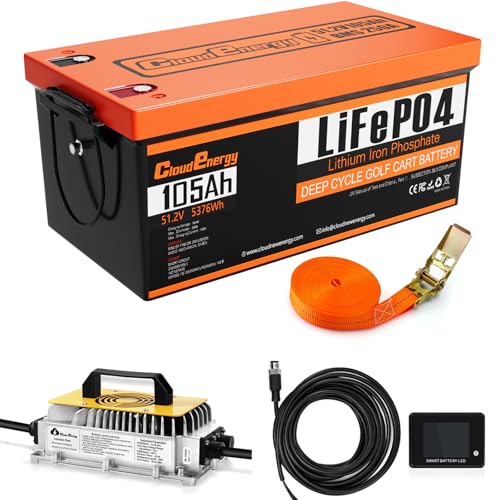
Cloudenergy 48V(51.2V) 105Ah LiFePO4 Lithium Golf Cart Battery Built-in 250A BMS,with Mobile APP,Touch Monitor and retention strap,6000+ Cycles,Perfect for Golf Carts(GFA48V-105AH With Charger)
|
View on Amazon
|
| 7 |

|
OGRPHY 36V Lithium Battery, 3.84KWh Golf Cart Batteries with 200A BMS, 25A Lifepo4 Battery with Charger, 1000A Peak Current Perfect for Golf Cart, Solar, Trolling Motor(100AH)
|
View on Amazon
|
| 8 |

|
LOSSIGY 48V Lithium Golf Cart Battery, 48 Volt Golf Cart Battery Conversion Kit with Charger&LCD Monitor, Built in 200A Bluetooth BMS, Peak Current 1000A(3-5s), Prefect for Golf Cart RV Solar System
|
View on Amazon
|
| 9 |

|
DC HOUSE Metal Case 36V 100Ah Pro Lithium Golf Cart Battery, LiFePO4 Battery with 36V 25A Charger, Bluetooth Mobile APP& LCD Monitor, 200A BMS, Peak Current 670A, Perfect for Trolling Motor, Marine
|
View on Amazon
|
| 10 |

|
Mosasaur 48V 105Ah Golf Cart Lithium Battery, Built-in Smart 200A BMS with Touch Monitor and 20-Amp Charger, APP Supported, MAX 10.24 kW, 4000+ Cycles Charging, Designed for Golf Cart
|
View on Amazon
|
Understanding Swing Speed and Distance
Your clubhead speed directly impacts how far the ball travels, but other factors like launch angle, spin, and smash factor also play important roles.
Swing Speed to Distance Chart
| Swing Speed |
Driver |
7-Iron |
PW |
Player Level |
| 60-70 mph |
140-170 yds |
90-110 yds |
60-75 yds |
Beginner/Senior |
| 70-80 mph |
170-200 yds |
110-130 yds |
75-85 yds |
Average Senior |
| 80-90 mph |
200-230 yds |
130-150 yds |
85-100 yds |
Average Amateur |
| 90-100 mph |
230-260 yds |
150-170 yds |
100-115 yds |
Skilled Amateur |
| 100-110 mph |
260-290 yds |
170-185 yds |
115-125 yds |
Low Handicap |
| 110+ mph |
290+ yds |
185+ yds |
125+ yds |
Tour Professional |
Key Distance Factors
Club Factors
- Clubhead speed (mph)
- Smash factor (impact efficiency)
- Loft angle
- Shaft characteristics
Ball Factors
- Ball speed (swing speed × smash)
- Launch angle
- Spin rate
- Ball construction
Environmental
- Altitude/elevation
- Temperature
- Wind conditions
- Ground firmness
Player Factors
- Angle of attack
- Impact position
- Club path
- Face contact
Frequently Asked Questions
How does swing speed translate to distance?
The basic formula:
- Driver: Swing speed × 2.5 = carry distance
- 7-iron: Swing speed × 1.6 = carry distance
- Wedge: Swing speed × 1.2 = carry distance
- These are rough estimates only
What's a good smash factor?
Ideal smash factors by club:
- Driver: 1.48-1.50 (perfect center contact)
- Fairway woods: 1.45-1.47
- Hybrids: 1.40-1.45
- Irons: 1.30-1.40
- Wedges: 1.20-1.30
How much does temperature affect distance?
Temperature impacts:
- ~1 yard per 10°F temperature change
- 70°F = baseline
- 40°F = ~3 yards shorter per club
- 90°F = ~2 yards longer per club
How can I increase my swing speed?
Speed training tips:
- Improve flexibility with stretching
- Strengthen core muscles
- Use weighted club training
- Optimize swing sequence
- Get professional instruction
Why don't my distances match the calculator?
Possible reasons:
- Inconsistent contact (low smash)
- Suboptimal launch conditions
- Equipment mismatch
- Environmental factors
- Measurement errors